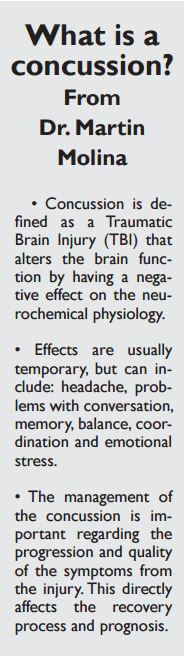
Coach Drew Sanders shares about VHS concussion management  


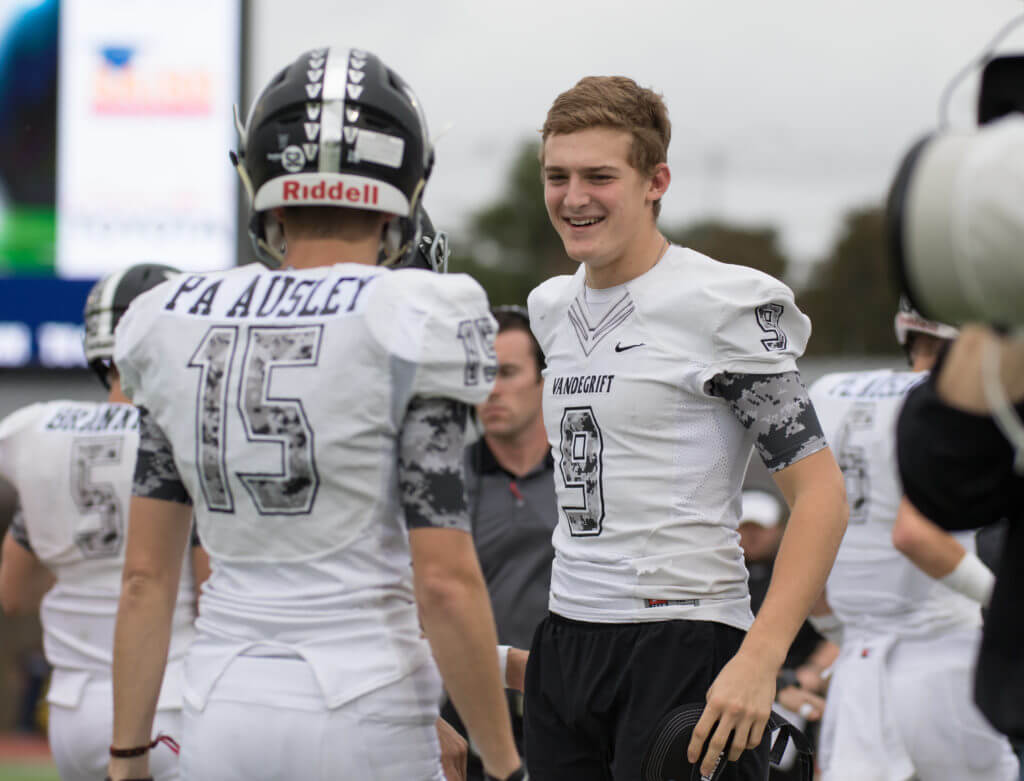
Vandegrift Vipers senior wide receiver Paxton Segina (9) congratulates his teammates during the Class 5A, Division I regional semifinal playoff game at Alamo Stadium in San Antonio on Friday, November 27, 2015. Because of Vandegrift and Leander ISD concussion protocol,  Segina was on the sidelines, unable to play at the game against East View, several games after he was airlifted from a home game where he encountered a concussion after a hit. “As a staff, we are so thrilled to see Paxton make a full recovery and further his football career at Stanford University,” said Drew Sanders, VHS athletic director and head football coach.

Vandegrift Vipers senior wide receiver Paxton Segina (9) congratulates his teammates during the Class 5A, Division I regional semifinal playoff game at Alamo Stadium in San Antonio on Friday, November 27, 2015.
Because of Vandegrift and Leander ISD concussion protocol, Segina was on the sidelines, unable to play at the game against East View, several games after he was airlifted from a home game where he encountered a concussion after a hit. “As a staff, we are so thrilled to see Paxton make a full recovery and further his football career at Stanford University,” said Drew Sanders, VHS athletic director and head football coach. Photo by Scott W. Coleman


Published May 4, 2016

By SARAH DOOLITTLE, Four Points News

Concussion management at Vandegrift has increased over the past several years, and it seems to be helping. Concussion numbers have gone up only slightly even though the VHS student population has increased, and concussions have gone down specifically in football, said Drew Sanders, VHS athletic director and head football coach.

During the last school year, 2014-15, the football team experienced three diagnosed concussions in practices, five in games and two that happened to players in their daily lives. There were twice as many concussions the previous year, Sanders said.

School-wide and in all sports during the same period, concussions at Vandegrift increased slightly, “the numbers rose barely but a reminder, school population did increase,” he said.

Even though all sports including soccer, lacrosse, basketball and volleyball have concussion risks, this report focuses on football.

“My job is to make this sport the safest I can possibly make it… I try to limit as much risk as I can. That’s my job,” said Sanders, who has been coaching for 20 years, the past eight at VHS.
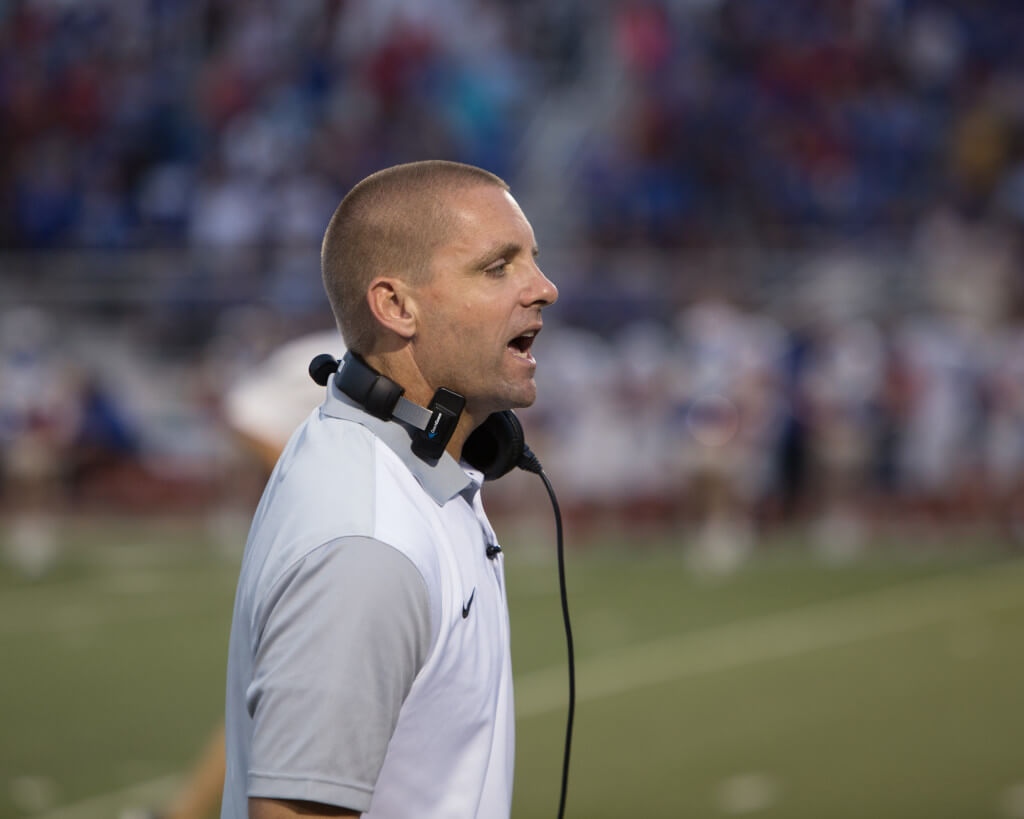
 “Football is safer than it’s ever been to play. When I played football, concussions weren’t even talked about,” said Drew Sanders, VHS athletic director and head football coach. He thinks the national conversation currently taking place around football and concussions is a good thing. Photo by Scott W. Coleman

“Football is safer than it’s ever been to play. When I played football, concussions weren’t even talked about,” said Drew Sanders, VHS athletic director and head football coach. He thinks the national conversation currently taking place around football and concussions is a good thing.
Photo by Scott W. Coleman

Continue reading

Four Points Pop Warner leads in concussion safety management  


Published May 4, 2016

By SARAH DOOLITTLE, Four Points News

Four Points Pop Warner Football and Cheer involves hundreds of young athletes and local families, and safety and concussion protocol is FPPW’s top priority.

“The coaches are all required… to go through a program called HEADS UP,” said Merchant Buchanan, director of marketing.

FPPW serves kids ages 5-11 and is a volunteer-led tackle football and cheer program. All coaches are volunteers, some parents of kids in the program and some who just love coaching football and cheer.FPPW_logo Continue reading

Part II: Managing the concussion risk for young athletes

Concussion side barPublished April 27, 2016

By SARAH DOOLITTLE, Four Points News

A national conversation is currently taking place in the U.S. about concussions and their potential long- and short-term risks, especially for young athletes.

The risk of potential long-term harm to a child’s developing brain from injury is still largely unknown. There are many questions about concussions including: how many can a child safely sustain? Of what severity? And at what age?

The numbers show that Leander ISD has just over 6,000 eligible athletes, and concussion numbers for the current year are up considerably from last year. While in the 2014-15 school year LISD treated 185 concussions, as of the end of March 2016, LISD had treated 216 concussions.

According to the Center for Injury Research and Policy, for high school athletes in 2010, head injuries from soccer outnumbered basketball, baseball, wrestling and softball combined. Football also makes up a large number of cases.

In 2015, Texas Family Physicians evaluated approximately 105 concussions from the greater Austin area. These predominantly included football, volleyball, soccer and lacrosse.

“All sports have a risk of concussion,” said Dr. Martin Molina, a local, family physician at Texas Family Physicians, which has an office in Four Points. Continue reading